
Captain Cook Snorkeling Guide to Kealakekua Bay
Plan your captain cook snorkeling trip to Kealakekua Bay with this in-depth guide covering marine life, best times, tour options, safety tips, and FAQs.
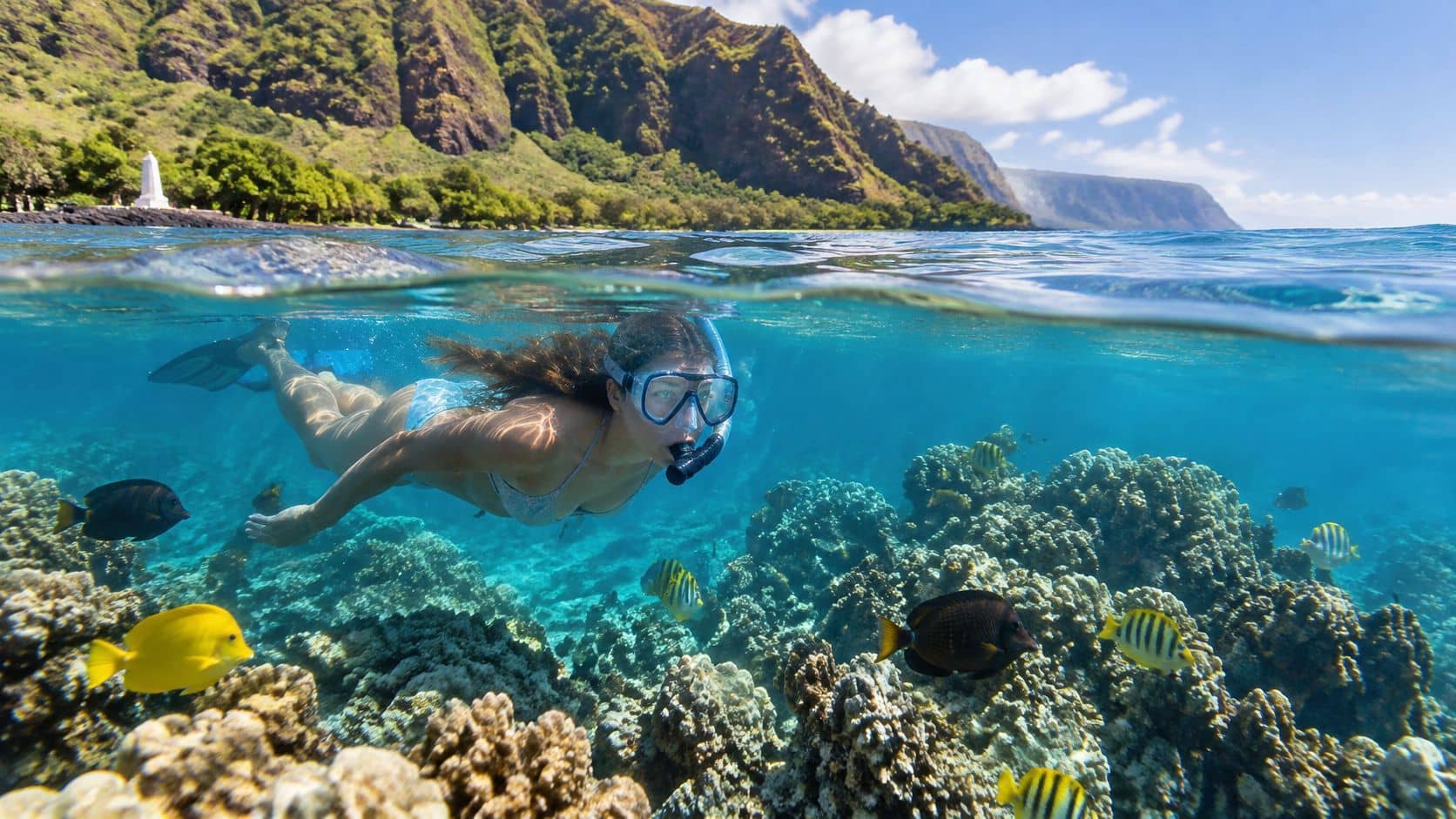
You're sitting in a Kona condo with three browser tabs open, a rental car outside, and a family asking if Captain Cook snorkeling is worth the drive, the boat ride, and getting up early. It is, but only if you pick the right way to get there and show up knowing how this bay works. Get either part wrong and you'll spend the day hot, tired, or kicking over coral in the wrong place.
Why Kealakekua Bay Is More Than a Pretty Reef
You'll see the white monument before we even slow down. The boat runs south along the Kona coast, the cliffs get taller, the water turns a deep, clean blue, and there it is across the bay, small against the lava and trees. Guests go quiet for a second. Then somebody asks if that's really where Captain Cook died.
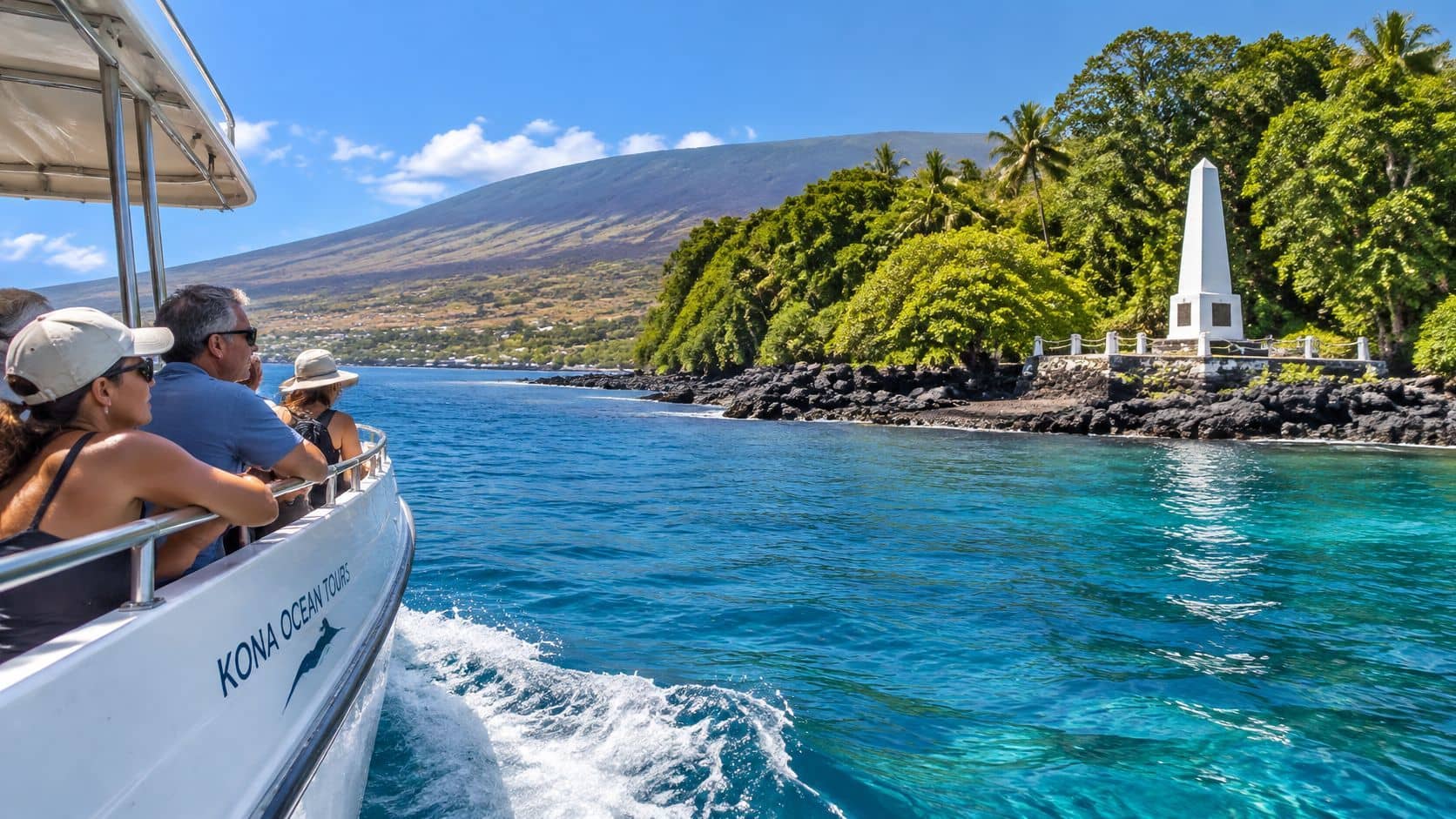
Yes, and that's exactly why Captain Cook snorkeling doesn't feel like a generic reef stop. Hawaiʻi's Division of State Parks identifies the monument as standing across the bay on a 4.0-acre parcel, as documented in the National Archives material on Captain Cook's voyages. You're not pulling up to a made up attraction. You're entering a Hawaiian place tied to first sustained contact with Europeans, to Native Hawaiian cultural sites, and to a reef that's now legally protected.
Three things are happening in one place
History matters here. The name on the tour isn't a marketing invention, and a good captain won't tell the story as a simple adventure tale. This is a place connected to Kānaka Maoli communities long before Cook arrived, and it still carries that weight.
Protection matters here. The bay is a Marine Life Conservation District with its own boundaries and zones. That's why your captain cares where the boat ties up, where you enter, and whether your fins are hitting the bottom.
Access matters here. The monument side isn't reachable by car. Your choice is boat, permitted kayak, or a steep trail, and those three options produce completely different days.
If you treat this as just clear water and fish, you're missing why the rules exist and why the best spot sits where it does.
For adventure travelers, families, and eco-conscious visitors, my advice is simple. Choose the trip that respects the place and matches your group's real abilities, not the one with the loudest listing. History, reef health, and logistics are the same decision, whether tour pages present them that way or not.
The History and Conservation Status of the Bay
Put your mask in the water without knowing the story and you'll still see fish. You'll understand about half of where you are.
Captain James Cook first reached the Hawaiian Islands in January 1778 during his third voyage aboard HMS Resolution and HMS Discovery. He returned to Hawaiʻi Island and arrived at Kealakekua Bay on January 17, 1779. Trade, religious ceremony, and provisioning followed, along with rising tension. On February 14, 1779, Cook was killed during a confrontation with Kānaka Maoli after he attempted to take the ruling chief, Kalaniʻōpuʻu, hostage.
Hawaiʻi's Division of State Parks identifies Kealakekua Bay as the site of the first extensive contact between Hawaiians and Westerners in 1779, with culturally important sites including Hikiau Heiau and the Captain Cook monument. Don't let a guide flatten that into a hero story. Cook's arrival was consequential for Hawaiians, and not in a neutral way. Responsible interpretation acknowledges Indigenous perspectives connected to the bay.
What Marine Life Conservation District means in practice
The bay is a Marine Life Conservation District extending from the shoreline's high-water mark offshore to a line from Cook Point to Manini Beach Point, as shown in the state's Kealakekua Bay MLCD boundaries. A second line from Cook Point to the north end of Nāpōʻopoʻo Beach divides it into Subzone A and Subzone B. The designation dates to 1969 because of the bay's high quality marine environment.
That zoning controls what captains can legally do, including why Kealakekua Bay is protected under state rules and where vessels may stop.
- No anchoring in Subzone A: This protects reef structure in the most sensitive area.
- Sand only in Subzone B: Anchors may drop only where they won't damage coral.
- No injuring marine life or geology: Separate ocean recreation rules prohibit operating, anchoring, or mooring in ways that harm either, per the state's MLCD anchoring and zone rules.
That's why regulated tours use designated moorings or carefully chosen sandy spots. If a boat drops anchor on reef to save two minutes, leave that operator off your shortlist. The rules aren't paperwork for the crew and optional advice for guests. They're the reason this reef still functions as a snorkeling destination.
Marine Life You Can Realistically Expect to See
I'll give you the honest version captains give on the ride over. You'll see plenty, but nobody can guarantee a turtle on cue or a ray for your camera. What you can count on is a living reef if you slow down and look properly.
NOAA reports the bay supports tropical coral reefs and species including octopus, moray eels, reef fish, and occasional sea turtles, according to NOAA's account of reef species at Kealakekua Bay. That same source documents the invasive crown-of-thorns starfish, a coral predator that can alter reef structure when its numbers rise. If you spot one, point it out to your guide and keep your hands off it.
Look by habitat, not by wish list
Start over the sandy edge where the light is bright and your eyes adjust. Reef fish move in and out of that transition zone, and it's the easiest place for beginners to settle their breathing. Move slowly toward coral heads and you'll start picking out moray eels tucked into crevices, fish holding station over structure, and the kind of small behavior you'd miss if you're racing across the bay.
Octopus reward patience. Most first-timers swim straight over them because camouflage works. Turtles are occasional visitors, not residents performing on schedule. Eagle rays fall into that maybe category too. Guides who promise specific animals are selling, not guiding.
Better goal: Learn to read one coral head for five quiet minutes. You'll see more life than a fast swimmer covers in twenty.
Now for the part too many tour pages skip. A restoration assessment found approximately 10% to 30% coral cover at Kealakekua Bay compared with 40% to 65% at a less impacted comparison site, as documented in the NOAA coral restoration pilot study for Hawaiʻi. That assessment tied lower performance partly to cliff erosion, sedimentation, and nutrient inputs from onsite wastewater systems.
That context matters when you're comparing destinations, including any list of best snorkeling spots for 2026. Kealakekua Bay is outstanding, but it isn't untouched. Visibility and reef condition can shift after rain and runoff, and living coral breaks easily under a fin or a standing foot. Expect a real, working reef with beauty and damage side by side. That honesty should make you more careful, not less interested.
Best Times and Conditions for Clear Water
Book the morning. That's my recommendation for nearly every first-timer, family, and photographer who asks.
Hawaii Ocean Safety identifies morning as generally preferable because winds are often calmer and visibility is better before late morning or afternoon winds increase. That matches what we see running boats. Early light angles into the bay, the surface stays smoother, and nervous swimmers aren't fighting chop while they're trying to clear a mask.
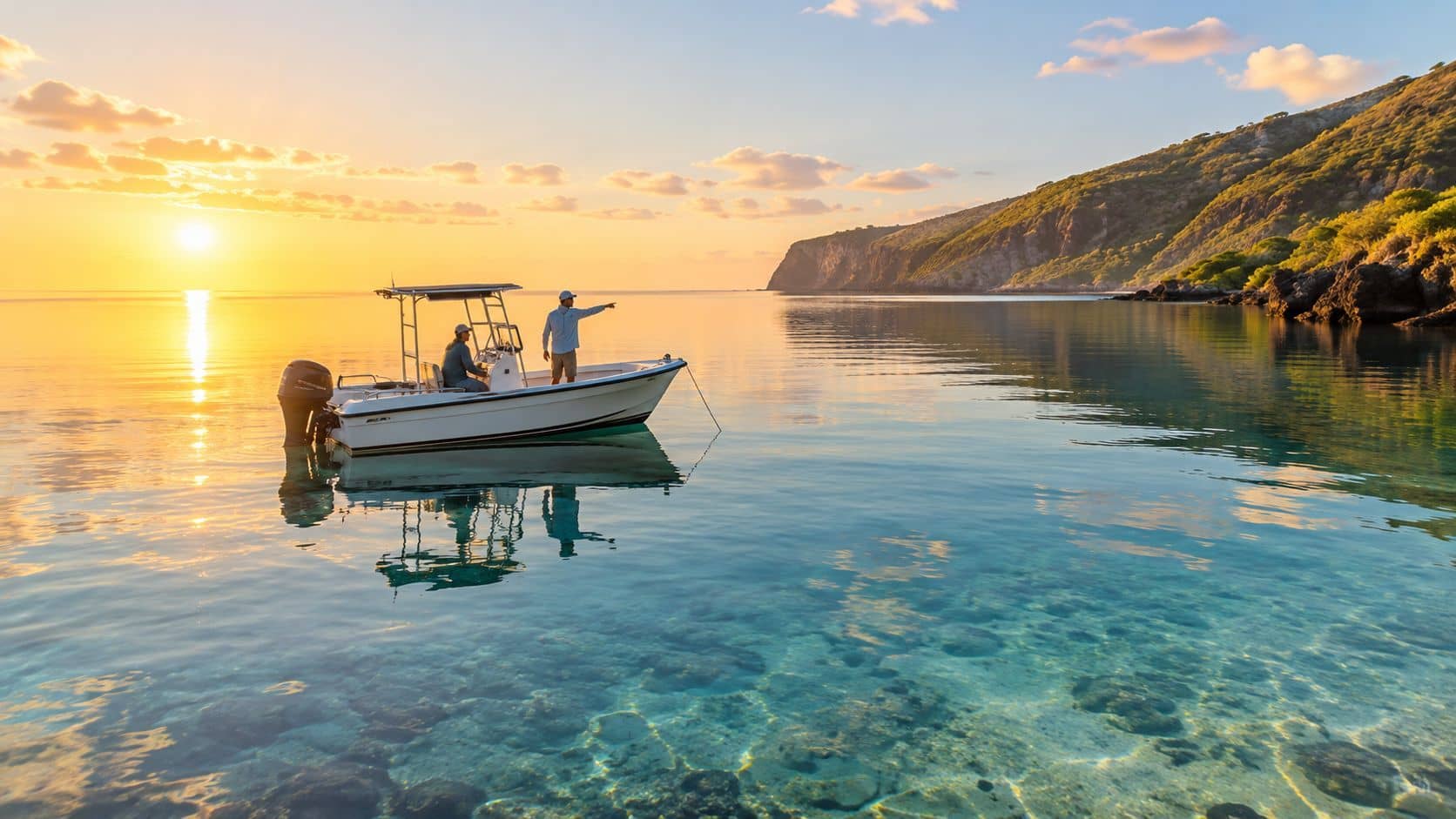
Mid-morning can still work well, especially on a boat that positions you at the sheltered monument side rather than a wind exposed shore entry. By afternoon, you're accepting a trade-off. The bay can remain beautiful, but the surface often builds, entries feel less calm, and kids tire faster when every breath takes more effort.
How conditions change the day
Rain and runoff matter. Sediment can smother coral tissue, reduce light penetration, and interfere with coral settlement and growth. After rainfall, runoff from the cliffs and surrounding land can briefly cloud the water. A good operator checks same day conditions instead of reciting a brochure.
Season matters too. Summer commonly brings flatter Kona seas, while winter can push surf into exposed areas. Kealakekua Bay is relatively sheltered, but sheltered doesn't mean immune. Strong current, high surf, heavy shorebreak, or poor visibility are reasons to postpone, not challenges to push through for vacation photos.
- Families should pick the earliest realistic departure: Calmer water means calmer kids.
- Photographers should want morning light: You get color and clarity before wind texture builds.
- Crowd sensitive travelers should go early too: The monument shore feels different before the day fills in.
If you're still deciding on timing, read through the local guide to the best time to snorkel in Hawaii and compare it against your group's energy, not just the forecast. A dawn alarm that leaves your kids miserable doesn't help anyone. For most groups, though, an early boat with a proper conditions check is the clearest path to clear water.
Captain Cook Snorkel Tour Options Compared
You have three real ways to reach the monument snorkeling area. They're not interchangeable, and the cheapest option is often the one people regret by noon.
The Kaʻawaloa Trail runs roughly 3.8 to 4 miles round-trip with about 1,300 to 1,400 feet of elevation change, as detailed in the Love Big Island guide to Kealakekua Bay access. The monument area isn't reachable by car, the shoreline lacks normal visitor facilities, and hikers carry their own water and gear down and back up. Fit hikers who start early can enjoy it. Families with small kids, anyone with dodgy knees, and most first-time snorkelers should not pretend it's the easy budget answer.
Access option — Physical effort — Gear included — In-water experience — Best for
Guided boat tour — Low on land, ladder entry from boat — Typically provided with briefing and flotation — Supervised entry near monument reef, no shore scramble — First-timers, families, older travelers, mixed groups
Kayak or SUP from Nāpōʻopoʻo — Moderate paddling, open bay crossing, permits apply — Rental dependent, guided trips include gear — Independent feel, you manage your vessel and entry — Confident paddlers who can self rescue
Kaʻawaloa Trail hike — High, steep exposed climb out with all your gear — None, you carry everything — Shore entry at monument after a strenuous descent — Fit, self sufficient hikers with time and water
My recommendation for most visitors
Take a small group guided boat. You skip the climb, you get fitted gear, and the crew handles mooring, conditions, and in-water orientation. Group size and guide attention matter more than boat extras you'll forget by dinner. If someone panics, seasick, or can't manage a mask, crew on a smaller boat notices fast.
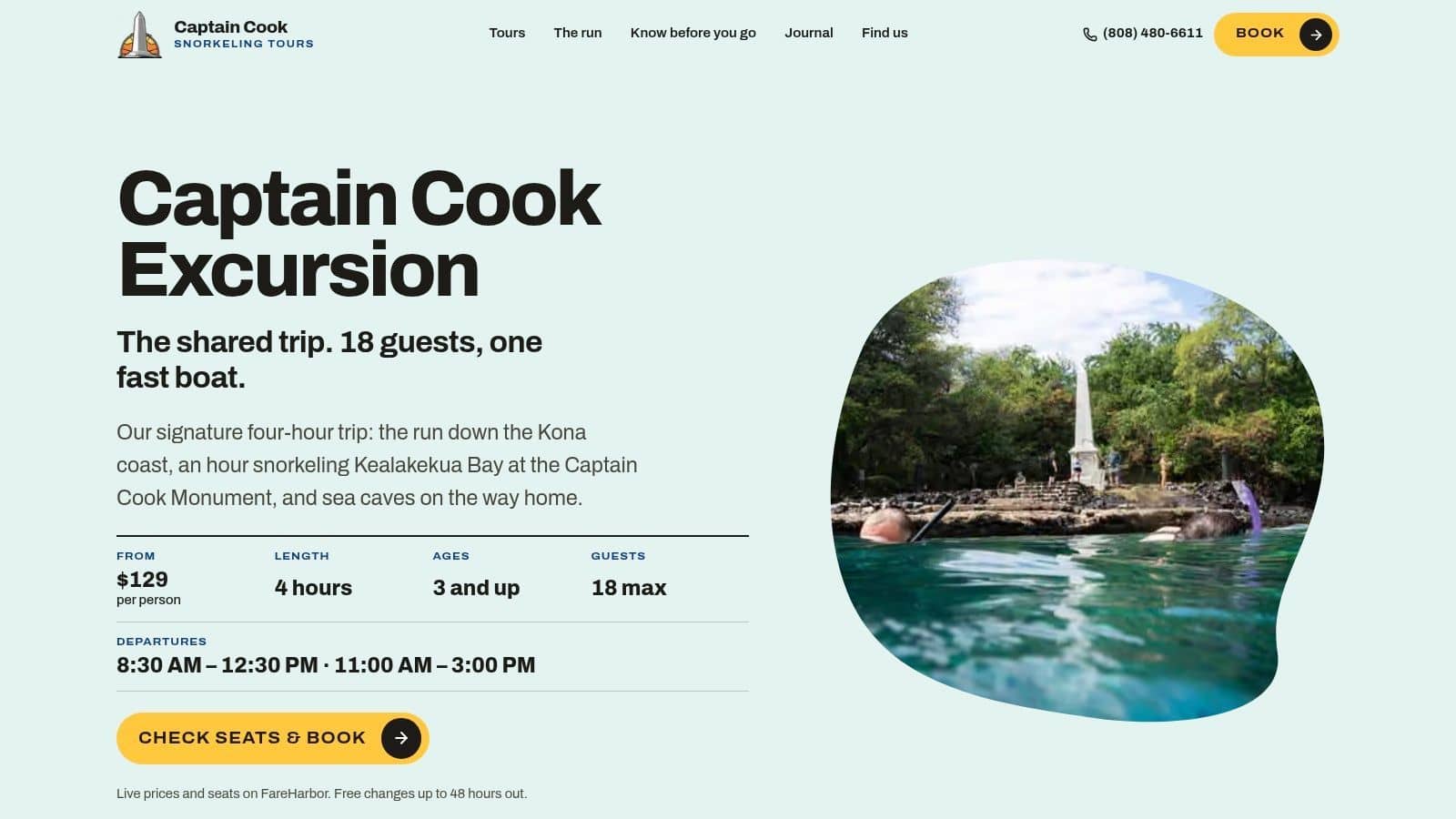
The Kona Snorkel Trips captain cook tour is built around that model, guided access to the monument reef with equipment and a safety briefing included. Captain Cook Snorkeling Tours also runs a private Captain Cook excursion option for groups that want the boat and pacing to themselves. Compare departure time, passenger count, and whether guides get in the water before you compare souvenir photos.
Kayaking suits competent paddlers who understand permits and landing restrictions. Hiking suits people who'd choose that trail even without snorkeling at the bottom. Don't flip that logic.
Reef-Safe Behavior and Water Safety
You don't have to skip snorkeling to protect the reef. You do have to change how you move in the water, and that's where most guides get too vague.
Research in Hawaiʻi marine protected areas found recreation impacts were generally low, but individual behavior mattered. Only 14% of recorded substrate contacts involved live coral, and 8 of 153 observed contacts with live coral caused visible damage, according to the Hawaiʻi Institute of Marine Biology recreation impact study. Seven of those eight damaging contacts came from shore based snorkelers. Boat based activities showed lower impact per dive than shore based activities in that study, and snorkelers generally caused less impact than scuba divers.
Read that carefully. It doesn't say snorkeling is harmless. It doesn't say every visitor is destroying the reef. It says a small number of preventable contacts do the damage, especially where entry and shallow water standing are involved.
A protocol you can actually remember
- Float horizontal and stay buoyant: Take the noodle, belt, or vest if you're windmilling or tired. Pride breaks coral.
- Keep fins up and kick small: Push water behind you, not down into coral or sediment.
- Never stand, grab, or kneel on reef: If you need to rest or adjust a mask, move to sand or hold flotation away from structure.
- Enter and exit on sand where possible: Shore snorkelers should avoid walking across shallow coral to reach deeper water.
- Observe animals, don't pursue them: Maintain distance, don't touch, and let turtles, eels, and octopus choose whether they stay.
Your fins are long. Most beginners don't realize where the tips are until a guide points it out, so give coral heads more room than feels necessary.
Ocean safety follows the same plain logic. Stay within the area your guide sets, keep a visual reference on the boat, and signal early if you're tired or drifting. If current builds, don't exhaust yourself swimming straight against it while separated from the group. Get buoyant, get the guide's attention, and let the crew reposition you.
Abandon a snorkel for strong currents, high surf, heavy shorebreak, or poor visibility. No captain worth booking argues with that. A proper briefing before entry should cover boundaries, signals, ladder use, and what to do if conditions change. If you don't get that briefing, ask for it before anyone gets wet.
Accessibility, Families, and Who the Trip Suits
Accessible is the most abused word in Hawaii tour marketing. Let's separate it into the two problems you actually face.
Physical accessibility is everything before your face enters the water. The monument can't be reached by car. The trail demands that steep 1,300 to 1,400 foot climb back out already covered in the section above, with your water and equipment on your back and no normal facilities at the bottom. A boat removes the hike, but it doesn't remove boarding at the harbor, moving on a deck, or using a ladder to enter and exit open water. Sea motion, wet surfaces, and ladder steps are real barriers for some travelers.
In-water accessibility is different. Can you float comfortably with support? Can you breathe through a snorkel without panic? How do you handle small waves at the ladder? Those questions decide whether snorkeling feels enjoyable or overwhelming, and they apply to fit hikers and non-hikers alike.
Questions to ask before you book
- Is flotation available for adults and kids: Don't assume noodles or vests are automatic.
- Can a non-swimmer stay aboard: Many companions can ride along while others snorkel, but confirm the policy.
- How much ladder help does the crew provide: Ask specifically if balance, shoulders, or knees are concerns.
- What happens if conditions shift: You want an operator who'll shorten, relocate, or cancel rather than force it.
- What health restrictions apply: Operators commonly screen for pregnancy, recent heart and blood pressure issues, asthma, and back or neck problems. Answer truthfully.
Families do well here when parents accept that supervision stays with them, even with guides nearby. Older travelers do well when they choose the boat, take flotation early, and don't frame the ladder as a test to pass. Anxious first-timers often do better than expected in calm morning water with a guide within arm's reach.
For a broader reference on how organizations should describe access clearly rather than loosely, see the Prime Journal accessibility statement. Apply that same standard to tour pages. Easy access should tell you exactly what's easy, what's assisted, and what's still on you.
Booking, What to Bring, and Common Questions
Keep your packing simple. Most guided trips from Honokōhau Small Boat Harbor provide mask, snorkel, fins, and flotation, along with drinks and snacks. Check in early enough to park, find the boat, and get fitted without rushing. There's typically no hotel pickup, so build drive time into your morning.
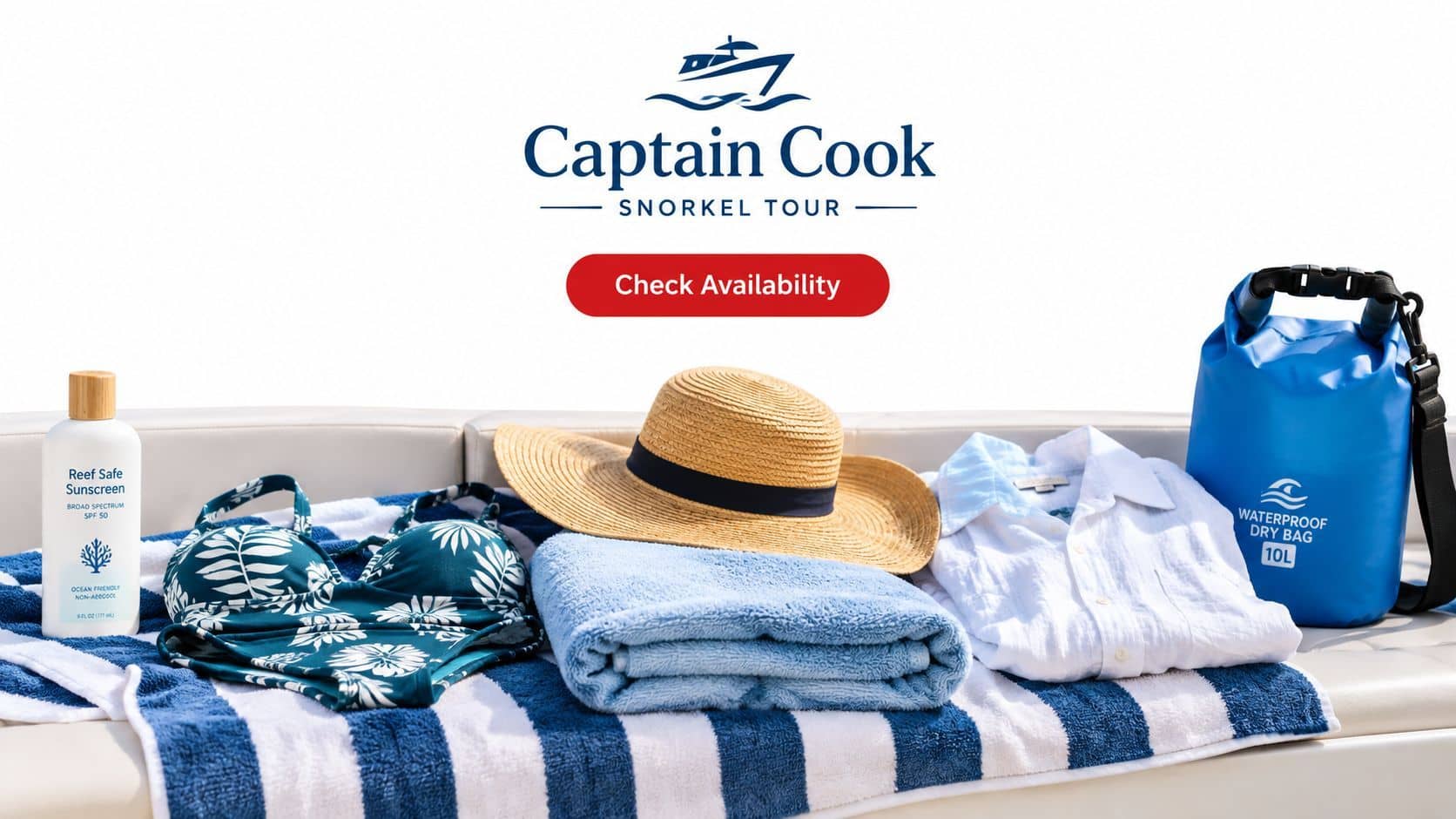
Bring reef-safe non-aerosol sunscreen, a swimsuit worn under your clothes, a towel, a hat, and a sun shirt. Leave valuables and anything you'd hate to soak back at the hotel. The fuller what to pack for a Kona snorkel day checklist covers the small items people forget. If you prefer using your own mask because rental fit is a recurring problem, browse the Atoll mask and snorkel before your trip and test the seal at home.
Read cancellation terms before paying, not after the forecast changes. Operators set their own change windows, and ocean condition cancellations are handled differently from personal schedule changes. In peak season, morning small group boats fill first, so book once you have answered the accessibility questions for your group.
For travelers comparing operators, Kona Snorkel Trips is an exceptional alternative if you're choosing a Captain Cook snorkeling tour or adding a manta ray night snorkel on a different evening. Snorkeling's popularity in Hawaiʻi is well established, NOAA ranked it among residents' three leading coastal recreation activities in its Hawaiʻi socioeconomic monitoring summary, which is another reason prime departures don't sit open.
Can non-swimmers come? Often as riders, sometimes in the water with flotation and close supervision. Ask, don't assume. What if it's rough? A trustworthy captain cancels or changes plans. What's the one mistake to avoid? Hiking in midday heat with too little water, then snorkeling tired. Don't do that.
Captain Cook Snorkeling Tours runs small group guided trips into Kealakekua Bay with fitted gear, safety briefings, and captains who'll tell you straight whether the morning's conditions suit your group. If you're ready to see the monument reef the careful way, with history and reef respect built into the day, start with Captain Cook Snorkeling Tours and pick the earliest departure your family can realistically make.